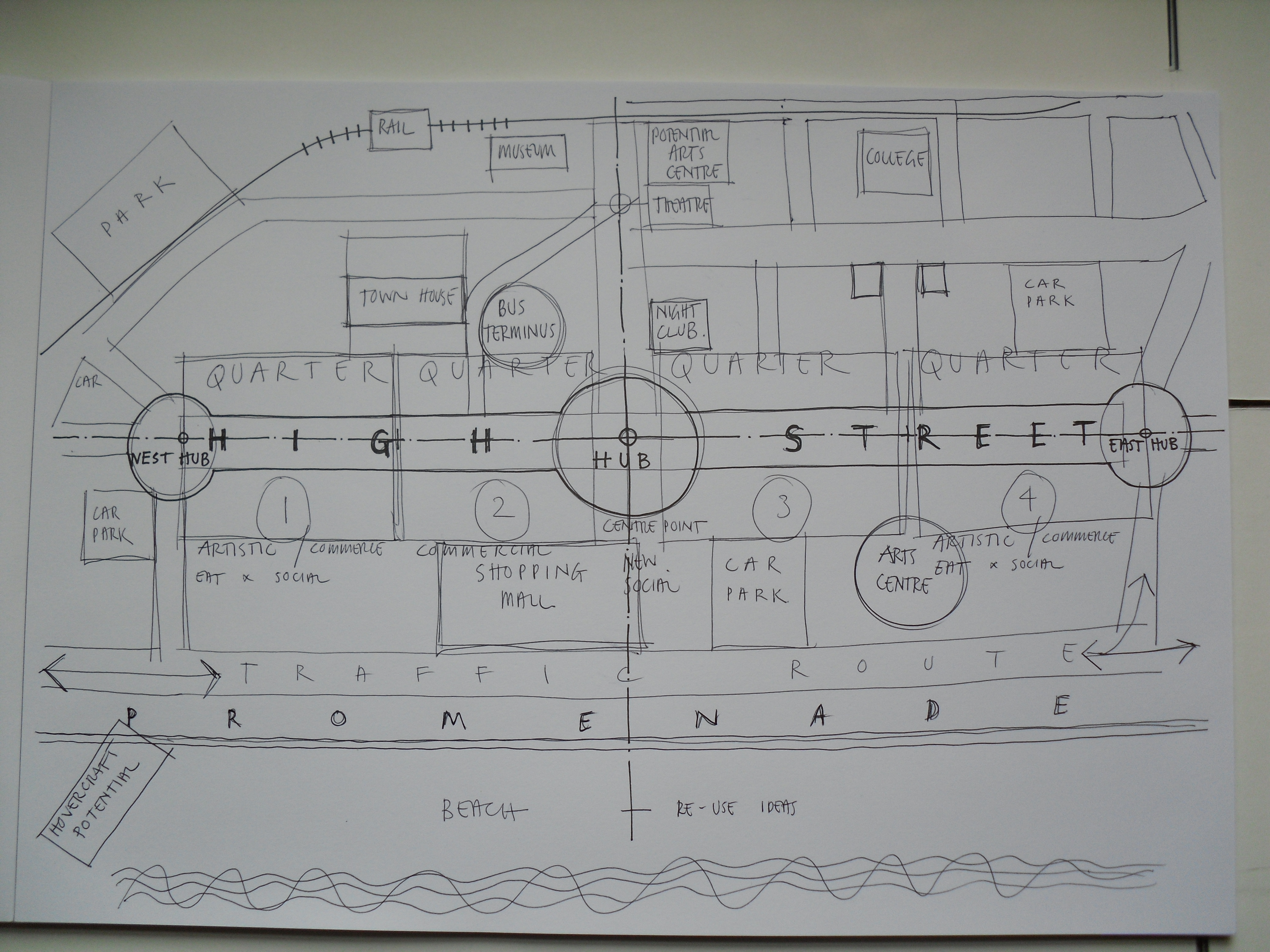
MY KIND OF TOWN WORKSHOP EVENTS
http://www.urhahn.nl/index.php?385
|
This is a short film showing the types of meetings and greetings that occur in urban spaces at street corners and in public areas and thoroughfares. I like it.
This blog website is well set out and the essence of its ethos and activities is quite relevant to my research thinking for an idea to develop a source hub for towns.
The ‘SOURCE HUB’ or ‘URBAN PORTAL’ would be developed as an interactive reference point to enable a wide range of participants and diferent organisations including specific stakeholders to have an up to date information resource that everyone can feed into and gain insights into the wide variety of issues and projects that affect the town.
This could develop stronger links between groups and allow more understanding of how co-operative thinking can produce a more integrated development within the urban spaces and activity events that occur within towns.
Stakeholders may range from :
TOWN CENTRE MANAGEMENT, RETAILERS, PLANNERS, PROPERTY DEVELOPERS, GREEN -ECO GROUPS, RESIDENTS, BUSINESS IMPROVEMENT AREAS, CIVIC SOCIETIES, MUSEUMS, LIBRARIES, SCHOOLS, COLLEGES, CHAMBERS OF COMMERCE, LOCAL AUTHORITY COUNCILLORS, TOURIST BOARDS, HOTELS , CHARITY ORGANISATIONS, THEATRE TRUSTS, SPORTING GROUPS, EVENT ORGANISERS, COMMUNITY GROUPS from SUBURBS, ARTISTIC abnd CREATIVE GROUPS, DESIGN and ARCHITECTURE FIRMS etc..
IDEALLY the ‘URBAN HUB’ would be the main source point for historical, current and future information for all stakeholder participants in any town.
The form that this ‘HUB ‘ would take could be developed in a variety of ways but initiallly a website blog wiyth interactive links could be the initial form taht it takes to be able to ‘SELL’ the concept idea to the stakeholders.
Each town would develop an identity brand that would be unique to the physical environment that each urban space has.
In order to gather enough information and research various methods or techniques will require to be used to establish evidence of the process and development of the MDes Research Project.
WORKSHOP ACTIVITY QUESTIONNAIRES FOCUS GROUPS
INTERVIEWS with STAKEHOLDERS BLOGGING ON LINE
DRAWINGS and DIAGRAMS MAPPING OUT CRITERIA
CREATE KNOWLEDGE SWATCHES CREATE 3D MODELS / DISPLAYS

http://gehlarchitects.wordpress.com/books/life-between-buildings-1971/
this link will show the information on a book by Jan Gehl, the founder of Gehl Architects. First published in 1971, LIFE BETWEEN BUILDINGS Using Public Space, the 6th edition ( 2010), is now part of my reading list for the MDes Research Project.
I have reviewed the current thinking regarding the design project related to Mindful Design Practice. It is a quick review of my design thinking about why and how I am hoping to develop my Mdes Research project – TRANSITIONAL SPACES.
My focus was intially on KIRKCALDY TOWN CENTRE but it may be more useful to develop ideas for High street spaces in general terms and use KIRKCALDY as a potential case study, along with other relevant research sources.
Transitional Spaces and Portals
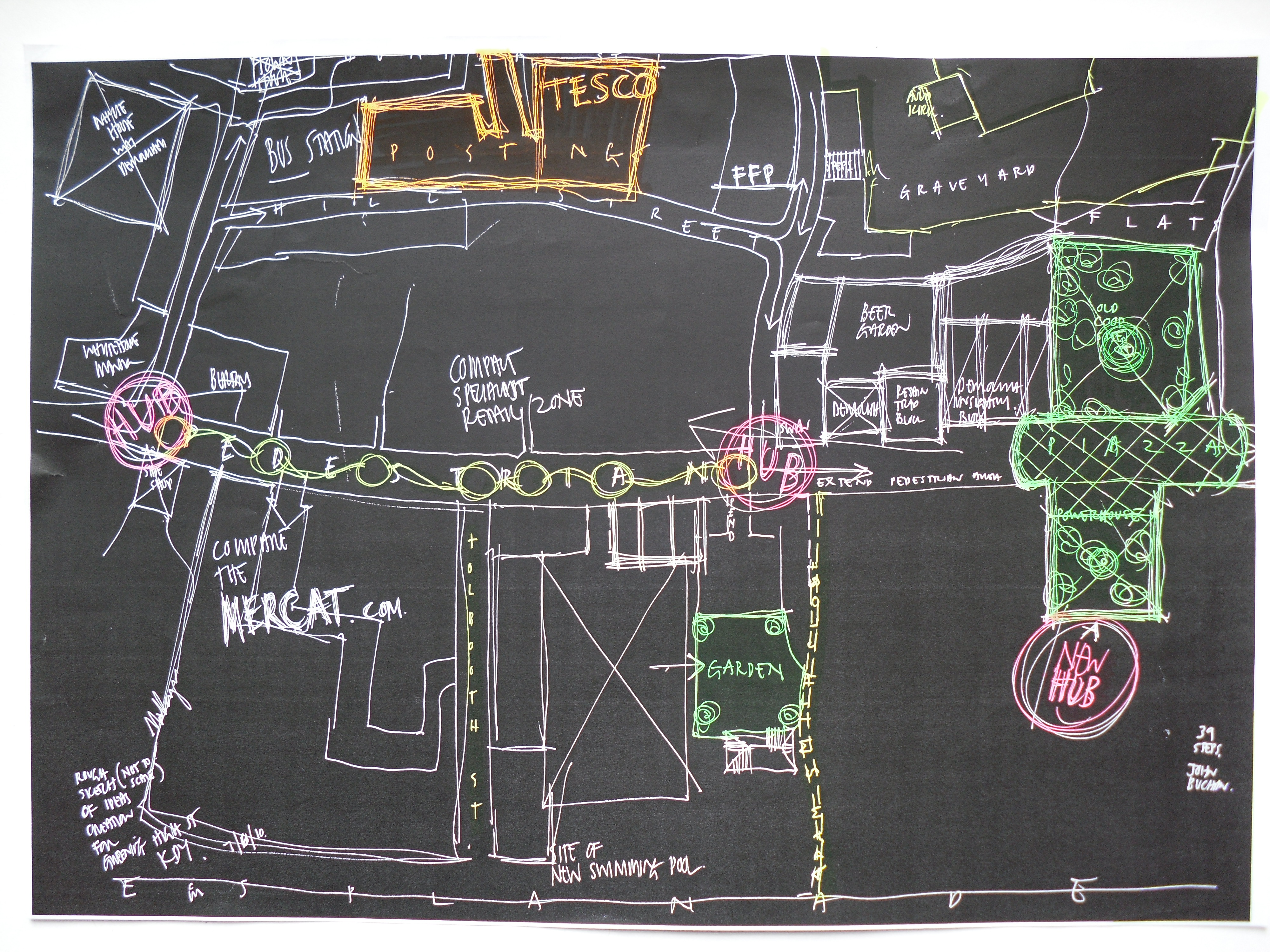
Transitional Spaces and Portals is a design-led investigation into how we use and engage with urban spaces in town centres. The spatial awareness that we experience as we transmit through and inside buildings and related spaces between, affects our human behaviour within the physicality of our urban environments. References into Environmental Psychology, Human Factor Behavioural Science, and current thinking on Urban Design would be adopted.
Kirkcaldy Town Centre, will be the focus of my investigations.
New Business Retail Parks are on the periphery of the town, creating an adverse effect on retailing trade in the High Street. The Design Research Project has the opportunity to develop ideas to recapture key urban spaces to improve the high street ambience, so that the town centre does not need to be just about shops.
Stakeholders are from a wide range of organisations including, Planning, Kirkcaldy 4 All , Town Management , Fife Council, Civic Society, Green Initiatives , Developers, Designers and the general public users.
Design methods and techniques to investigate and record the high street environments would aim to develop a proposal that could act as a link mechanism strategy for one or more stakeholders, to develop a new useable urbanism for all.
 I O N S P A C E